What we have learned
We have been planting since 2015. We believe at least half of what went into the ground in the early years has been lost. This page is what we learned from that, because an organisation that cannot say why its work failed cannot be trusted to say why it succeeded.
What happened
Two examples, of several.
In one planting, young vines were trained up trees using cotton cords. The cords broke down over time and nobody was checking. By the time anyone saw it, the vines had been down on the ground long enough that new cords would not have saved them.
In another, vines were planted near a walking path. The path was later cleared with weed whackers and the vines went with it. In a third place, two years after planting, a field was opened on that ground, and the forest was cut, vines included.
None of these are exotic failures. They are learnings that we see as child diseases. They have made us stronger and helped us learn how to do this sustainably, including the importance of maintenance and follow-up, and how to include them in our plans and budget. They are what happens when planting is funded and the twenty-four months afterwards are not.
What we changed
Five things, each one answering a failure we had already paid for.
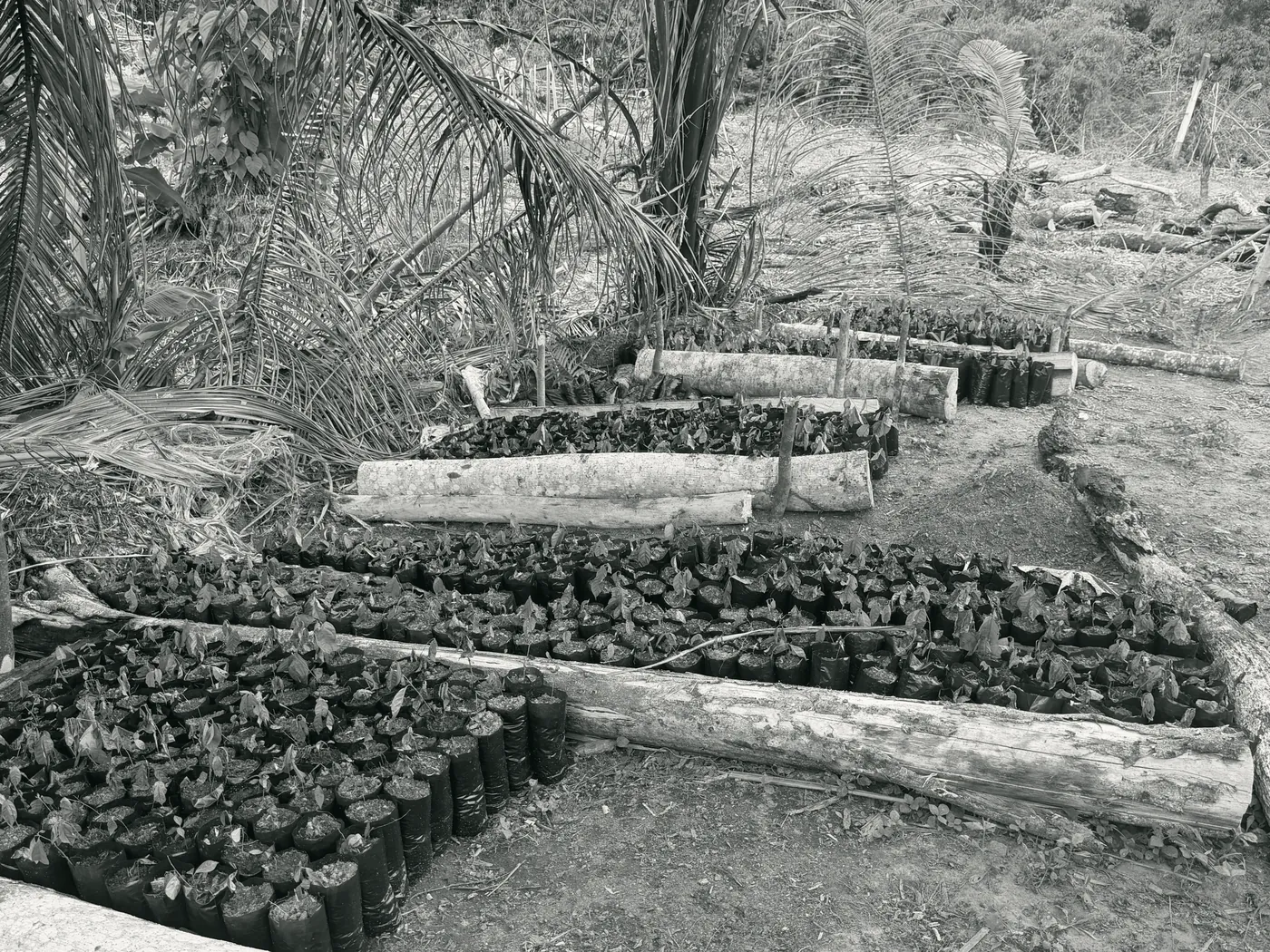
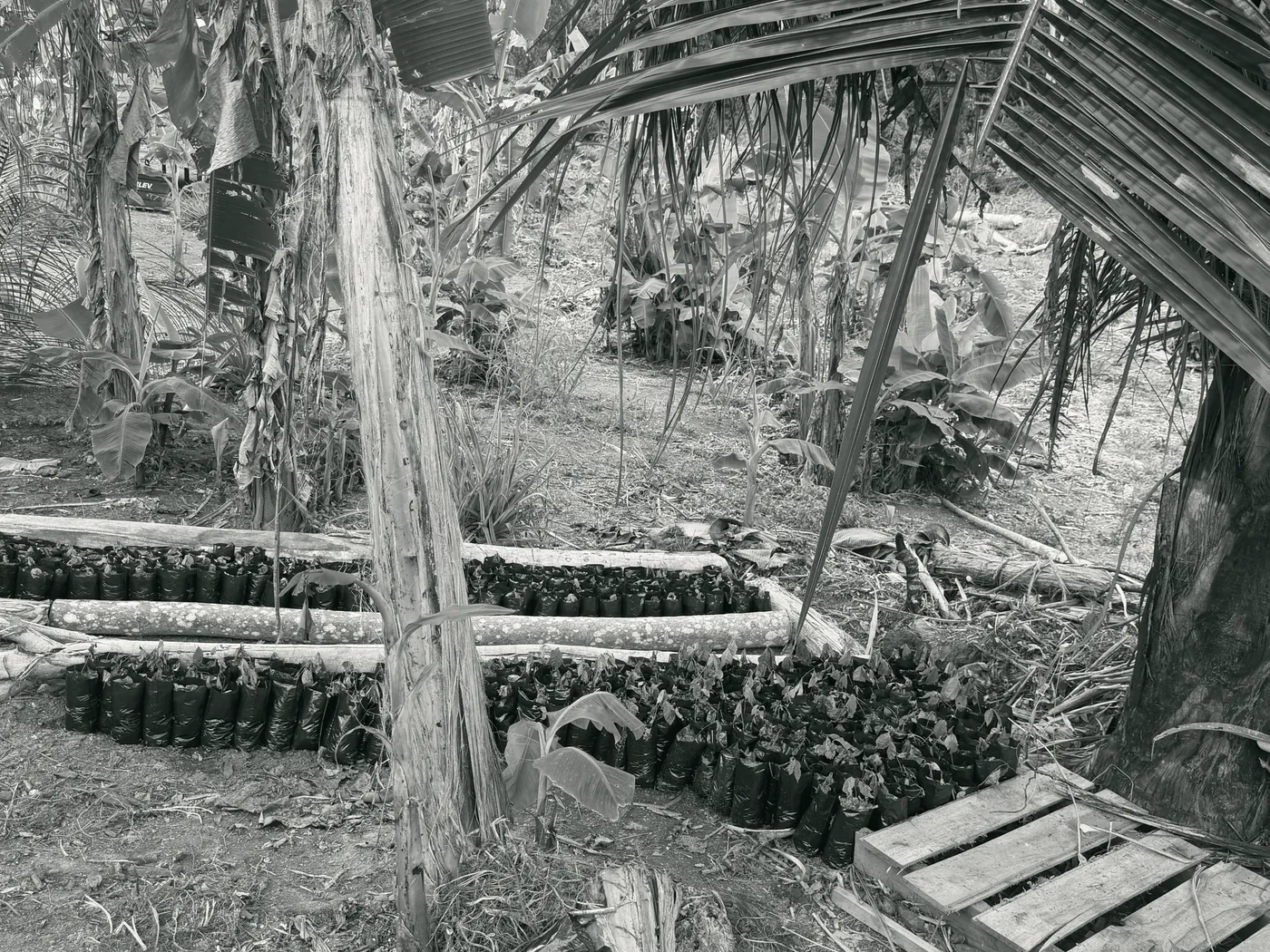
- The nursery bed sits where the vines will live. Seedlings used to be carried in by boat, car and truck shortly before planting, arriving with damaged roots and already under stress. Now a nursery bed is built in the same climate, rain and soil where the vines will be planted. Seedlings rest there for months, and at planting time they move a few metres, lifted from the bag straight into the hole.
- Nothing is planted near a path, a clearing or anything likely to become a field. Siting is decided with the people who will still be there in five years.
- The cord goes on later, not at planting. Planting is three phases: nursery, growing, and then the cord only once the plant has height. Attaching it too early was one of the ways we lost vines. And the cords we now use will survive the harsh jungle climate for years.
- Seedlings are handled as little as possible. Every extra move costs survival.
- Follow-up is funded from the start. We are now taking care of the nurseries for the first 3 months, and we plan checks at six, twelve, eighteen and twenty-four months are written into the budget before the first plant goes in. If follow-up is not funded, we do not plant.
What we expect now
With the method above we expect around nine in ten of the vines we plant to live. That is an expectation, not a measurement. Nothing has yet been planted under the full method and counted.
In December 2026 we are walking the forest and counting what survives from the earlier years. In the spring of 2027 we will publish that count and update this page, whatever it says.